Your Workforce is Designed Around Yesterday's Business
Workforce planning focuses primarily on current roles and headcount rather than the capabilities required to deliver the organisation's future strategy.

How we can help
Workforce strategies aligned to the capabilities the organisation will need next.
Workforce planning built around today's roles can leave an organisation staffed for the business it has been, rather than equipped for the business its strategy is taking it towards. As strategies evolve, markets shift and technology changes the nature of work, organisations need a clearer view of which capabilities they will require and how they will build or access them.
Effective talent strategy therefore starts with the direction of the organisation and works backwards. It connects business strategy, workforce requirements, critical roles and capability development, enabling leadership to anticipate workforce needs rather than continually responding to vacancies and emerging gaps.
At Concinnity, we align workforce planning with business strategy and future capability requirements, helping organisations understand the workforce implications of their strategic choices. We identify critical capabilities and roles, assess current and future gaps, and develop practical workforce strategies covering the capabilities the organisation needs to build, buy, borrow or transform.
We help organisations move from reactive workforce management to strategic talent and capability planning, connecting workforce decisions directly to business priorities and future requirements.
From workforce planning to capability strategy. From today's roles to tomorrow's requirements. From reactive talent decisions to a workforce built for the future.
Develop talent strategies that translate business priorities into clear workforce and capability requirements, with defined priorities for attracting, developing, deploying and retaining talent.
Model future workforce requirements against strategic, market, technological and operational changes, identifying the capabilities and workforce capacity the organisation will need.
Assess current capabilities against future requirements to identify critical gaps, capability risks and areas requiring targeted investment or intervention.
Identify the roles, talent segments and capabilities that are most critical to strategy execution, enabling differentiated investment where it matters most.
Connect talent priorities directly to strategic objectives, ensuring recruitment, development, succession and workforce investment reinforce the direction of the organisation.
Explore alternative workforce scenarios and their implications, helping leadership anticipate different growth, transformation, technology or market pathways.
Determine the most effective way to access critical capabilities, whether through recruitment, internal development, strategic partnerships, contingent talent or redesign of existing roles.
The common thread: the organisation is making workforce decisions based primarily on where it is today, when the more important question is where its strategy is taking it next.
Workforce decisions made primarily on where the organisation is today, rather than where its strategy is taking it next, leave capability gaps to be discovered too late.
Workforce planning focuses primarily on current roles and headcount rather than the capabilities required to deliver the organisation's future strategy.
Leadership has not established which roles and capabilities will be most important to executing the strategy over the next three to five years.
Hiring begins when vacancies arise, rather than being guided by a forward-looking workforce and capability plan.
Leadership knows that capability gaps exist but cannot confidently identify which ones represent the greatest risk to strategy execution.
Business and talent strategies have been developed separately, leaving recruitment, development and workforce investment insufficiently connected to strategic priorities.
Critical knowledge or capability sits with a small number of people, creating concentration risk and vulnerability when key employees leave.
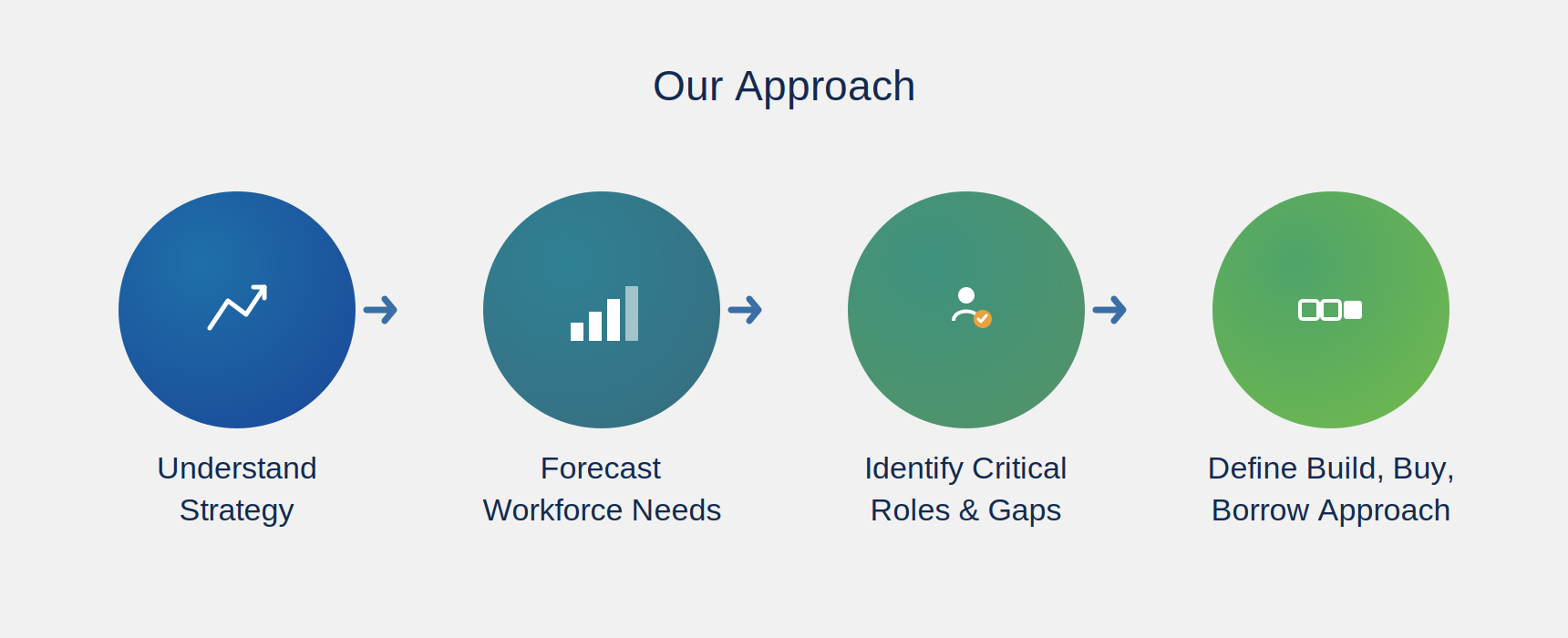
We start by understanding the organisation's strategy and the workforce implications of its strategic choices, translating business direction into workforce and capability requirements.
We model future workforce requirements against strategic, market, technological and operational change, forecasting the capabilities and capacity the organisation will need over the relevant planning horizon.
From there, we identify the critical roles, talent segments and capability gaps that matter most to strategy execution, enabling leadership to prioritise investment where the risk and opportunity are greatest.
Finally, we help leadership decide the most effective way to access each critical capability, whether through recruitment, internal development, strategic partnerships, contingent talent or redesigning existing roles and work.
From workforce planning to capability strategy. From today's roles to tomorrow's requirements. From reactive talent decisions to a workforce built for the future.