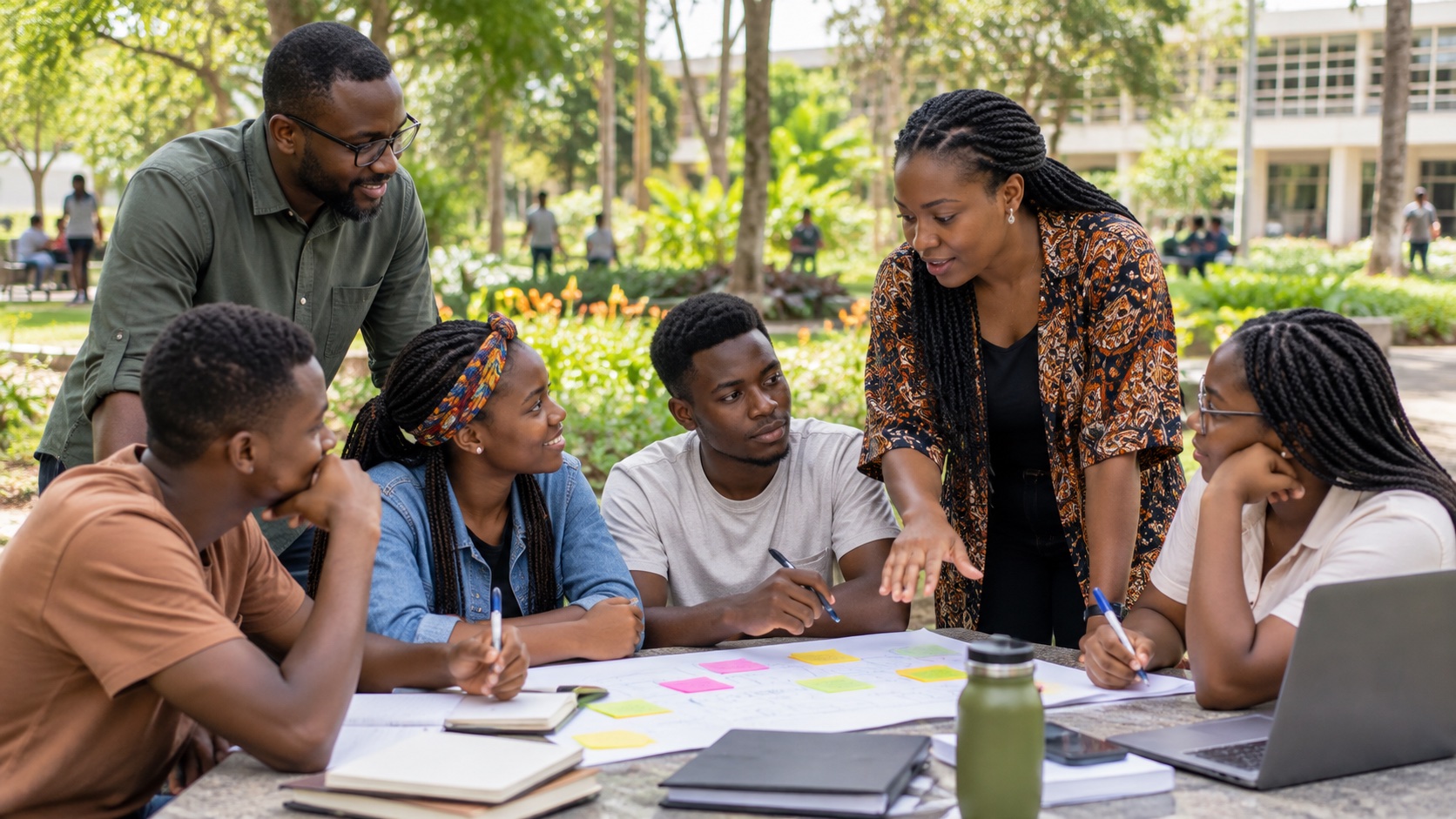
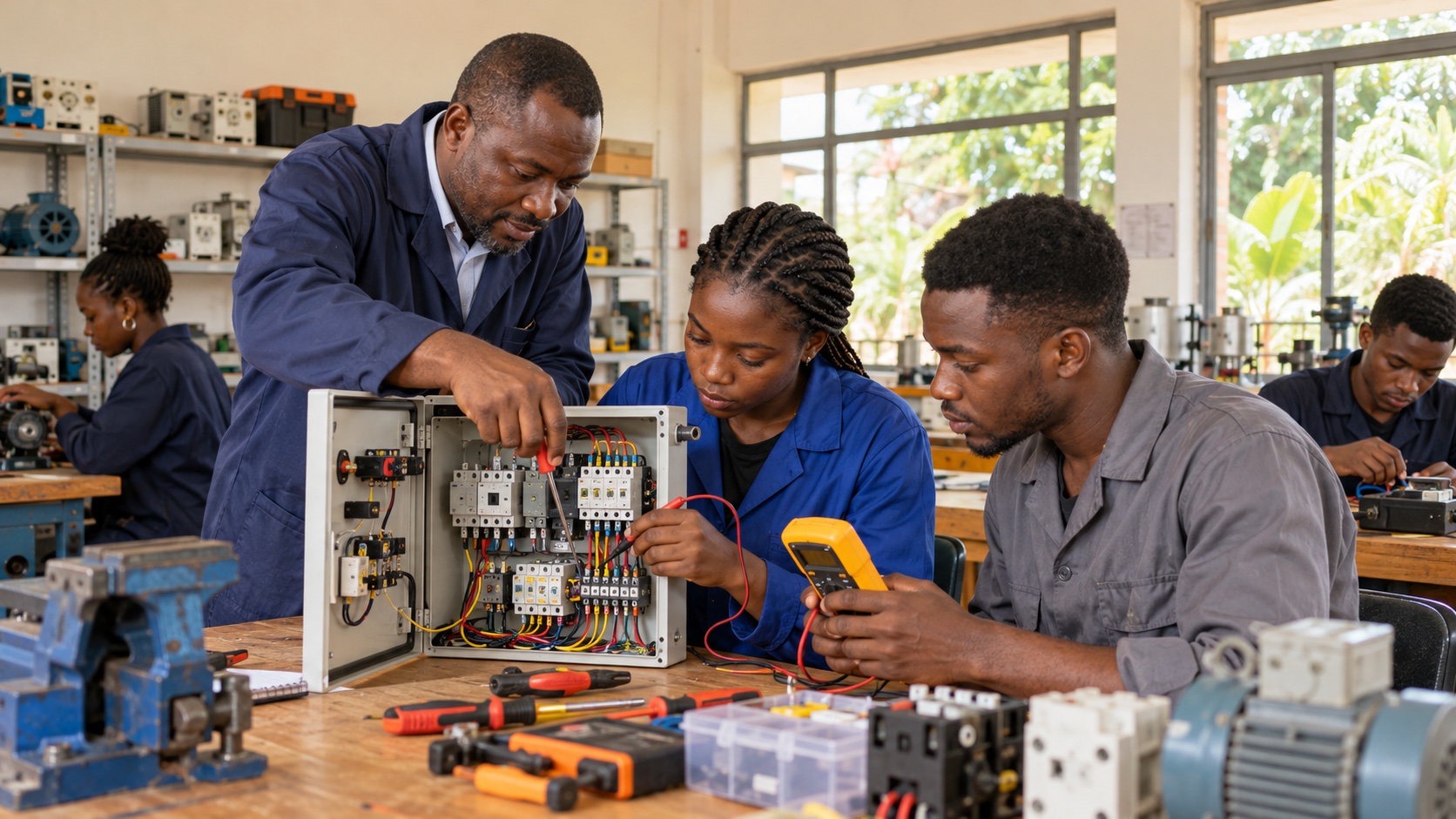
An instructor and young professionals working in a technical skills laboratory.

Industries

Education & Skills Development

We help education providers, training institutions, skills partnerships and employers build the capabilities, systems and standards needed to prepare people for a changing world of work. We bring global skills frameworks into the Nigerian context, helping institutions develop relevant skills, strengthen delivery and create clearer pathways from learning to employment and economic opportunity.

Closing the Gap Between What People Learn and What the Economy Needs.

The gap between what education systems teach and what employers and economies need is widening. AI, automation, digitalisation and changing business models are reshaping work faster than many education and training systems can adapt. Graduates can enter the labour market with qualifications that do not fully translate into workplace capability, while employers face persistent gaps in the practical, digital, problem-solving and human skills modern roles demand. Increasingly, people need more than a qualification to navigate a labour market that rewards adaptability, continuous learning and the ability to create value.

Closing this gap requires more than curriculum reform or isolated training. It requires stronger connections between education, skills development, employers and the economy, enabling institutions to understand changing workforce needs, develop relevant capabilities and create credible pathways from learning to employment, enterprise and economic participation.

At Concinnity, we work with education providers, training institutions, skills organisations and employers to strengthen the capabilities, systems and standards needed for a changing world of work. We translate emerging workforce requirements into practical approaches to curriculum, capability development, institutional strengthening and skills delivery.

Our work spans twenty-first century skills, curriculum and capability design, technical and vocational education and training (TVET), workforce readiness, digital literacy and entrepreneurship. We help institutions improve the relevance and quality of learning while developing the practical capabilities required for productive work. Our focus is not simply on what people learn, but on whether they can apply it, adapt to change and create value.

We support stronger TVET institutions and technical training pathways, develop essential skills that complement technical knowledge, and strengthen digital capability for an increasingly technology-driven economy. We also help young people translate foundational skills into livelihoods, enterprise and income-generating opportunities.

Alongside this, we strengthen institutional and academic capacity, helping education and training institutions improve programme design, educator and trainer capability, assessment and responsiveness to changing demands.

The result is a stronger connection between learning and work, qualification and capability, and skills and economic opportunity. We aim to help build an education and training ecosystem that produces people who are not only qualified, but capable and equipped to enter work, adapt as work changes, contribute productively and create value.

Ultimately, our ambition is to help Nigeria develop people and institutions capable of keeping pace with the future of work.
How We Help Education & Skills Development

Building Capability That Performs

We build essential and future capabilities through learning that translates into performance, going beyond technical training to develop the practical and human skills that determine whether people can actually apply what they have learned in real roles.

Convening Partnerships That Scale

We convene the multi-stakeholder partnerships that build skills for the economy at scale, bringing education providers, employers and skills bodies together around a shared standard rather than leaving skills development to isolated, one-off initiatives.

Supporting Entrepreneurs and Innovators

We support entrepreneurs and ventures through incubation and capability building, helping early-stage businesses develop the operational and commercial skills needed to grow beyond a good idea into a sustainable enterprise.

Preparing the Workforce of Tomorrow

We prepare workforces for what AI and changing work will demand, helping organisations identify the essential and future skills their people will need and build the learning pathways to close that gap before it becomes a competitive disadvantage.

Signs You Need This

The skills gap becomes urgent when what an institution teaches and what the economy needs have quietly grown apart. These signs tend to surface only once employers, learners or funders start asking hard questions about outcomes.

Graduates Are Not Job-Ready

Employers report that graduates lack the practical and human skills needed to perform effectively in real roles, leaving new hires able to pass an interview but not immediately productive on the job.

Digital Literacy Has Not Kept Pace

Learners and staff lack the digital literacy increasingly required for effective work and learning, even where they have completed formally accredited technical programmes.

Skills Partnerships Have Lost Momentum

A multi-institution skills initiative launched well but has not sustained coordinated delivery, with early enthusiasm fading once no single partner remains accountable for outcomes.

Curriculum Is Disconnected From Employer Demand

Training continues to prepare people for roles with limited genuine labour market demand, while employers report unfilled vacancies in skills the curriculum barely addresses.

Future Skills Requirements Are Unclear

The institution knows work is changing but has not established which skills will matter most next, leaving investment in training exposed to guesswork rather than evidence.

Client Results

A global insight paper from Skills Builder Partnership and KPMG International exploring how education systems can harness AI while equipping learners with the human capabilities needed to thrive in an AI-enabled future.

This Concinnity paper examines digital literacy as the main driver of performance and economic growth in the modern workplace.

This Concinnity paper examines how structured school entrepreneurship programmes, embedding real-world business creation, financial literacy and essential soft skills into the curriculum, can close the gap between traditional schooling and the practical demands of the modern economy.

Concinnity is Nigeria's exclusive Lead Country Partner for the Skills Builder Partnership, connecting Nigerian institutions, employers and learners to a global network and shared framework for teaching, learning and measuring the essential skills that underpin employability.

Teach A Man To Fish is an innovative school-based programme that provides a hands-on approach to entrepreneurship education, where students learn to be entrepreneurial by doing it in real life, starting a real venture as part of their education.

An executive and senior adviser engaged in a coaching conversation.

Have a challenge worth solving?

Let's shape the right solution, together.

START A CONVERSATION

Do work that moves institutions.

Grow your career where impact is real.

JOIN OUR TEAM