A Critical Departure Would Create a Leadership Gap
The departure of a senior or strategically important employee would leave a critical role without a credible internal successor.

How we can help
Building strong talent pipelines before critical roles become critical gaps.
Succession planning often begins too late. When a critical leader announces their departure, the organisation is forced to make high-stakes talent decisions under pressure, with limited visibility of internal capability and few well-prepared alternatives.
Strong succession pipelines are built deliberately over time. They depend on clear visibility of organisational talent, structured talent reviews, credible career pathways, targeted development and early identification of roles where leadership continuity matters most.
At Concinnity, we help organisations move from reactive succession planning to a deliberate, enterprise-wide approach to talent management and leadership continuity. We identify critical roles, assess the strength and readiness of internal talent, and establish development pathways that prepare people for greater responsibility before the need arises.
We help organisations build the talent visibility, development pathways and succession discipline required to strengthen leadership continuity and reduce dependency on individual people.
From talent visibility to leadership readiness. From succession risk to organisational resilience. From individual dependency to sustainable talent pipelines.
Establish structured, evidence-based talent reviews that create a consistent view of performance, potential, readiness and development needs across the organisation.
Identify roles where leadership continuity is strategically important and establish credible succession pipelines with clear readiness assessments and development actions.
Create transparent career pathways that show employees how they can progress, what capabilities they need to develop and what experiences are required to move into future roles.
Identify high-potential talent using clear criteria and provide targeted development, exposure and experiences that prepare individuals for broader responsibilities.
Develop targeted approaches to retain critical and high-value talent by understanding what drives retention and creating the conditions that encourage people to stay.
Assess the readiness of potential successors and create structured transition plans that support individuals moving into critical leadership roles.
Identify areas of talent concentration, key-person dependency and succession vulnerability, enabling leadership to address capability risks before they become business risks.
The organisation relies on informal knowledge about who might succeed whom, rather than a structured, documented succession process, until a critical departure forces the issue.
Individually, these are manageable talent risks. Left unaddressed together, they signal an organisation exposed to real leadership continuity risk.
The departure of a senior or strategically important employee would leave a critical role without a credible internal successor.
Talent discussions happen irregularly, differ significantly between functions or depend heavily on individual managers' judgement.
Strong employees have limited visibility of career opportunities, development pathways or the roles they could progress into.
The organisation relies on informal knowledge about who might succeed whom rather than a structured, documented succession process.
Critical employees are increasingly difficult to retain, particularly where competitors can offer clearer career opportunities or development pathways.
Important relationships, knowledge or capabilities are concentrated in a small number of individuals, creating operational or leadership risk if they leave.
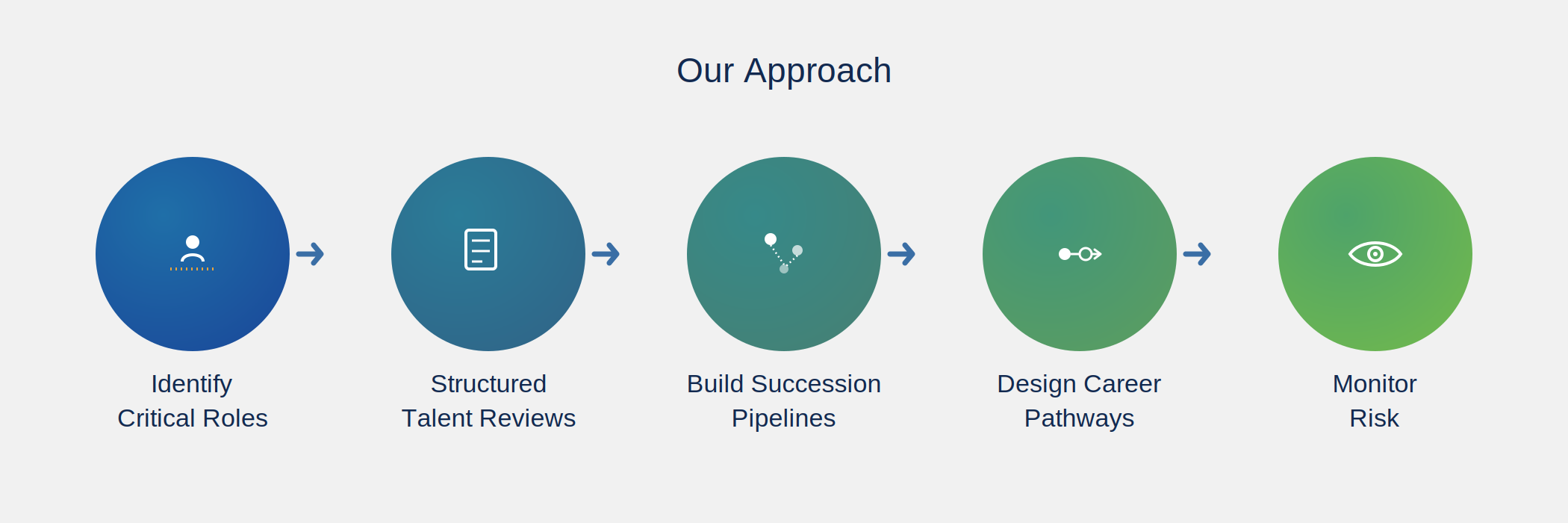
We build succession as an ongoing organisational capability, rather than a process activated when someone announces their departure. We begin by identifying the roles and capabilities most critical to organisational performance and establishing clear criteria for performance, potential and readiness.
Structured talent reviews then create a consistent enterprise-wide view of talent, helping leadership identify high-potential individuals and emerging successors while reducing reliance on informal perceptions or individual sponsorship.
For critical roles, we establish succession pipelines with explicit readiness levels and development priorities, giving potential successors targeted experiences, coaching and stretch assignments connected to the requirements of the roles they may eventually hold.
Career pathways and high-potential development are designed alongside succession, creating a stronger link between organisational continuity and employee retention.
We also help leadership monitor key-person dependency and succession risk over time, ensuring that succession plans remain current as strategy, structures and talent change.
From talent visibility to readiness. From succession planning to leadership continuity. From key-person dependency to organisational resilience.