
The Same Customer Problems Keep Returning
Customer complaints continue to surface the same issues that were supposedly resolved, suggesting that the underlying experience problem has not been addressed.

How we can help
Experiences designed around what customers actually experience, not what organisations assume they deliver.
Customer experience is often designed from the inside out. Organisations map their processes, define service standards and invest in channels, yet the experience customers actually receive can be very different. The critical gaps often appear between touchpoints, where handoffs fail, service varies by channel or unresolved friction quietly erodes satisfaction and loyalty.
At Concinnity, we help organisations understand the customer experience as it is genuinely lived, identify the moments that matter most and redesign the journeys, interactions and service mechanisms that shape them. We combine customer insight, journey diagnostics, service design and independent assessment to turn experience improvements into measurable gains in satisfaction, loyalty and trust.
We help organisations close the gap between the experience they intend to deliver and the experience customers actually receive, wherever they interact with the organisation.
Our approach moves beyond customer research or journey mapping as standalone exercises, helping organisations create a more consistent, lower-friction experience that customers can genuinely feel.
Mapping and diagnosing end-to-end customer journeys to identify friction, failure points, unnecessary complexity and the moments that most influence satisfaction and loyalty.
Redesigning experiences across physical, digital and hybrid channels so customers receive a more consistent, intuitive and effective experience wherever they interact with the organisation.
Designing complaint-handling and service-recovery mechanisms that resolve problems quickly, restore customer confidence and turn service failures into opportunities to rebuild trust.
Building customer experience measurement frameworks that connect feedback and experience data to the operational issues that need to be addressed, rather than treating measurement as an end in itself.
Using mystery shopping, independent assessments and other evidence-based methods to evaluate service delivery from the customer's perspective and identify gaps between intended and actual experience.
Prioritising experience improvements around the customer journeys, touchpoints and service issues with the greatest impact on customer value, loyalty and organisational performance.
Customer experience becomes a genuine business risk when leadership can no longer tell whether the experience customers describe matches the one the organisation believes it delivers.
The common thread: the organisation is managing customer experience by assumption, not by evidence of what customers actually go through.
Customer complaints continue to surface the same issues that were supposedly resolved, suggesting that the underlying experience problem has not been addressed.
Frontline teams and leadership understand individual processes but have never experienced the complete customer journey from the customer's perspective.
Customer satisfaction and feedback data is gathered regularly, but there is no clear ownership or mechanism for translating what it reveals into action.
Customers receive noticeably different levels of service depending on whether they interact through a branch, call centre, digital platform or another channel.
The organisation has defined service standards, but there is little evidence that customers consistently experience the service that has been promised.
Leadership suspects that customer experience is inconsistent or deteriorating but has no reliable, independent evidence with which to test that assumption.
Customers repeatedly have to repeat information, navigate unnecessary steps or move between channels to resolve straightforward requests.
The organisation has identified multiple customer experience issues but lacks a clear evidence base for deciding which improvements will create the greatest value.
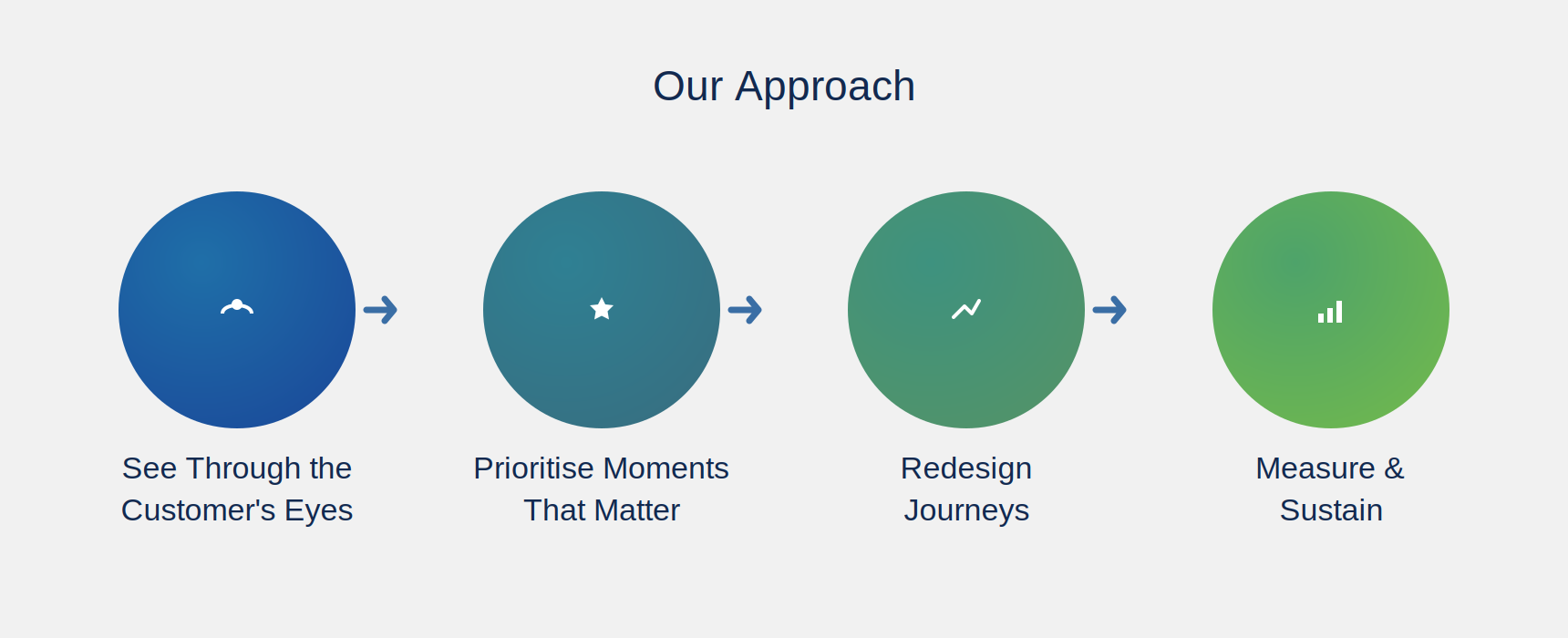
We begin by understanding how customers actually experience the organisation, rather than relying solely on internal process maps, service standards or management assumptions. We combine customer insight, journey mapping, operational evidence and, where appropriate, independent mystery shopping to identify the gaps between the intended experience and the experience customers actually receive.
Not every customer touchpoint carries equal weight. We identify the interactions that have the greatest influence on satisfaction, trust, loyalty and value, allowing improvement effort to focus on the moments that matter most.
We then redesign priority customer journeys and service interactions around genuine customer needs, addressing the underlying processes, handoffs, behaviours and channel issues that create friction rather than simply treating the visible symptoms.
Experience improvements are supported by practical measurement frameworks and clear accountability, enabling leadership to see whether changes are improving the customer experience over time and whether those improvements are translating into stronger relationships and measurable business outcomes.
Our approach moves beyond customer research or journey mapping as standalone exercises. We translate insight into practical change, helping organisations create a more consistent, lower-friction experience that customers can genuinely feel and that the organisation can measure, manage and continuously improve.
Financial Services · Case Study

Concinnity used independent mystery shopping to evaluate a commercial bank's branch service delivery against its own stated standards, identifying the specific...