The Brand Promise and Experience Have Drifted Apart
The organisation communicates a compelling promise, but customers, employees or other stakeholders experience something materially different.

How we can help
Reputation and trust built deliberately, not left to chance.
A brand is the promise an organisation makes. Reputation is the judgement stakeholders form from what they see, hear and experience. The two should reinforce each other, but they can drift apart quickly when customer experience, leadership behaviour, communications and organisational actions tell different stories.
That gap can remain invisible for years until it begins to affect customer confidence, employee attraction, investor interest, partnerships or the organisation's ability to operate effectively. In markets where trust is increasingly difficult to earn and easy to lose, reputation needs to be managed as a strategic asset rather than treated as a communications issue.
At Concinnity, we help organisations clarify their market position, understand how they are perceived and deliberately strengthen the relationship between brand promise, organisational behaviour and stakeholder experience.
We combine brand strategy, reputation assessment, stakeholder insight and strategic positioning to help organisations build a reputation that is credible, distinctive and aligned with the direction of the business.
The objective is not simply a stronger brand identity, but a credible and distinctive reputation that stakeholders recognise, trust and experience consistently.
Defining a distinctive market position and coherent brand architecture that clarifies what the organisation stands for, who it serves and why it should be trusted.
Identifying the issues, behaviours and stakeholder perceptions that could strengthen or undermine reputation, allowing leadership to address vulnerabilities before they become crises.
Generating evidence on how customers, employees, investors, partners, regulators and other priority stakeholders actually perceive the organisation, rather than relying on internal assumptions.
Ensuring the organisation's brand promise and market positioning reflect its strategic ambitions, capabilities and the value it intends to create.
Identifying the actions, experiences and relationships that build credibility with the stakeholders most important to the organisation's future.
Developing practical crisis and reputation-response approaches that enable leadership teams to respond quickly and coherently when trust is threatened.
Brand and reputation become a strategic vulnerability when what the organisation says, what it does and what stakeholders believe start to diverge.
The common thread: reputation is being shaped by default, through accumulated experience and perception, rather than by deliberate design.
The organisation communicates a compelling promise, but customers, employees or other stakeholders experience something materially different.
A reputational problem emerges without warning because stakeholder sentiment, emerging concerns or external perceptions have not been systematically monitored.
The brand positioning is difficult to distinguish from competitors, making it harder for customers and other stakeholders to understand why the organisation is meaningfully different.
Different parts of the business describe the organisation, its value proposition or its purpose differently, creating confusion internally and externally.
Customers, employees, investors, partners or regulators are becoming more demanding about credibility, transparency and organisational behaviour.
Expansion into a new market, sector or stakeholder group requires credibility and trust that the organisation has not yet established.
Senior leaders have strong views about how the organisation is perceived but limited independent evidence to validate those assumptions.
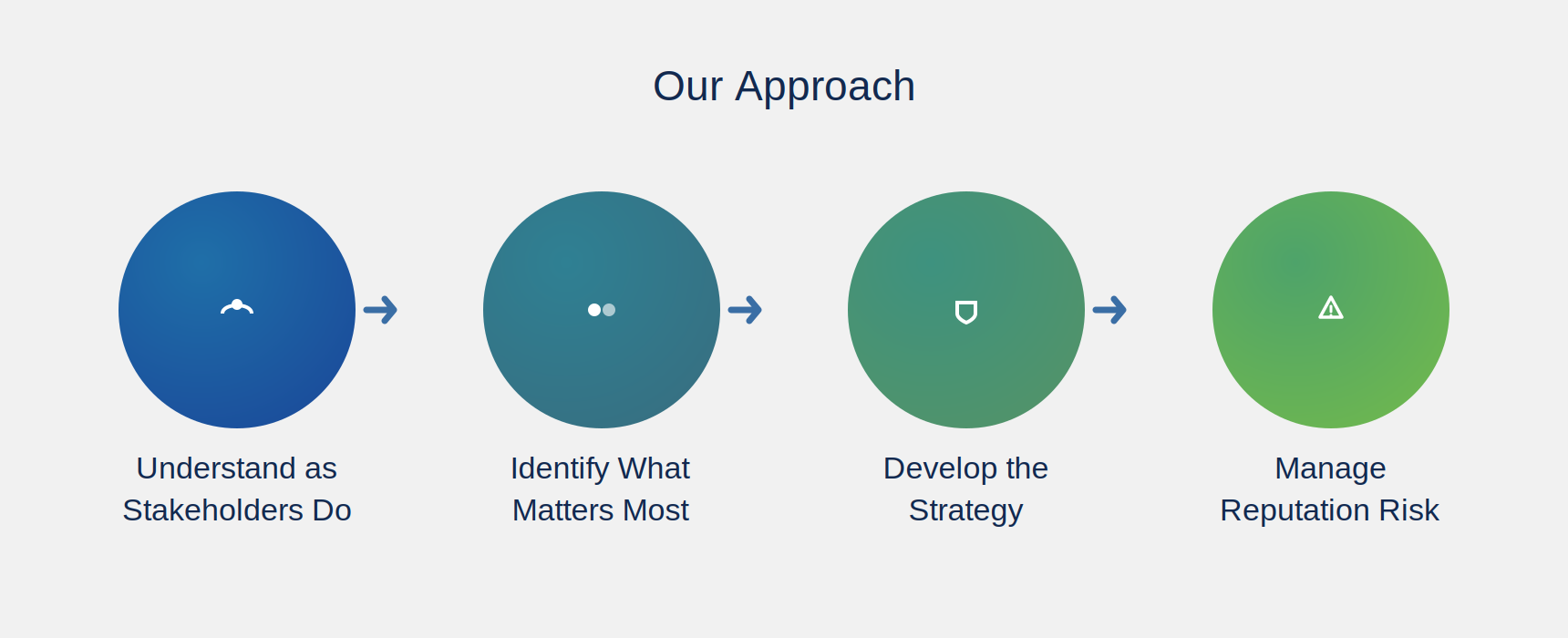
We begin by understanding the organisation as stakeholders actually experience it, rather than simply accepting the internal narrative. We examine the gap between what the organisation says, what it does and what stakeholders believe, using structured perception research and stakeholder insight.
We then identify the reputation attributes that matter most to the organisation's strategic ambitions. Not every organisation needs to be perceived in the same way, and not every stakeholder values the same things.
From there, we develop a clear brand and reputation strategy that connects positioning with organisational behaviour, customer experience, leadership, communications and stakeholder engagement.
We also help leadership teams anticipate and manage reputation risk, establishing the governance, monitoring and response mechanisms required to identify emerging issues before they become more difficult or costly to address.
The objective is not simply a stronger brand identity. It is a credible and distinctive reputation that stakeholders recognise, trust and experience consistently, strengthening the organisation's position today while creating a stronger foundation for future growth.