A Sector Strategy Lacks a Structural Evidence Base
A strategic decision about a sector or industry is being made without a rigorous understanding of its underlying structure and dynamics.

How we can help
Understanding how sectors and economies actually move.
Strategic decisions at the sector or economy-wide level require an understanding of dynamics that extend well beyond any single organisation: structural shifts, value chain relationships, policy influence and the broader economic forces shaping demand and competition.
This kind of research is frequently commissioned too narrowly, focused on the immediate question at hand without sufficiently understanding the wider system that question sits within, producing findings that look credible but miss the forces that actually matter.
At Concinnity, we conduct economic and sector research that examines the structural dynamics shaping an industry or economy, giving organisations, investors and institutions a rigorous evidence base for sector-level strategy and decision-making.
We help organisations and institutions understand the structural forces shaping a sector or economy, translating that understanding into evidence-based strategic and policy recommendations.
The objective is research that captures the structural dynamics genuinely shaping a sector, not a narrow answer to an immediate question that misses the wider system.
Conduct in-depth studies of specific sectors, examining structure, performance, trends and the forces shaping competitiveness and growth.
Assess the economic impact of a policy, investment, sector or intervention, using rigorous methodology to quantify effects on growth, employment and value creation.
Map and analyse value chains to identify where value is created, where inefficiencies exist and where intervention could strengthen competitiveness.
Conduct research designed specifically to inform policy decisions, translating economic evidence into recommendations policymakers can act on.
Benchmark sector performance against comparable markets and economies to identify where structural gaps and opportunities exist.
Sector-level decisions require evidence that reaches beyond any single organisation's own experience of the market.
The common thread: the decision at stake operates at a sector or economy level, but the evidence behind it has not been gathered at that scale.
A strategic decision about a sector or industry is being made without a rigorous understanding of its underlying structure and dynamics.
A claim about the economic impact of a policy, investment or intervention has not been independently and rigorously assessed.
The organisation knows a value chain is underperforming but has not systematically mapped where the constraints genuinely sit.
An organisation or institution is advocating a policy position without a sufficiently rigorous economic evidence base behind it.
There is no clear, evidence-based view of how the sector compares with relevant peer markets or economies.
An important sector question is being examined only from the perspective of a single organisation, rather than the wider system it operates within.
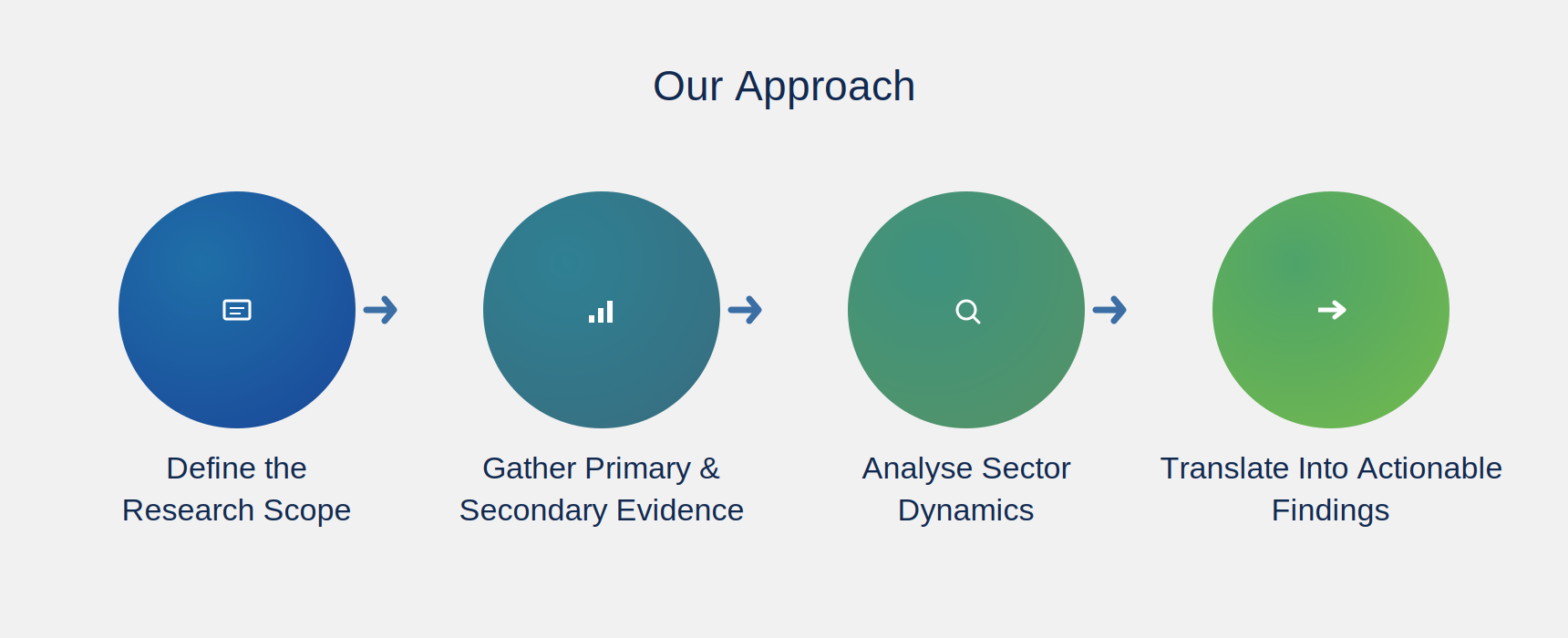
We begin by defining the research scope carefully, ensuring the study captures the wider structural dynamics relevant to the question, not just the narrow slice immediately visible to the commissioning organisation.
We gather both primary and secondary evidence, combining original research with rigorous analysis of existing data, policy documents and comparative markets.
This evidence is analysed to understand sector dynamics: how value is created and lost, what structural constraints exist and how the sector is likely to evolve.
Findings are translated into actionable recommendations relevant to the audience commissioning the research, whether that is a private organisation, an investor or a policy institution.
The result is sector-level evidence rigorous enough to support strategic and policy decisions with genuine confidence.